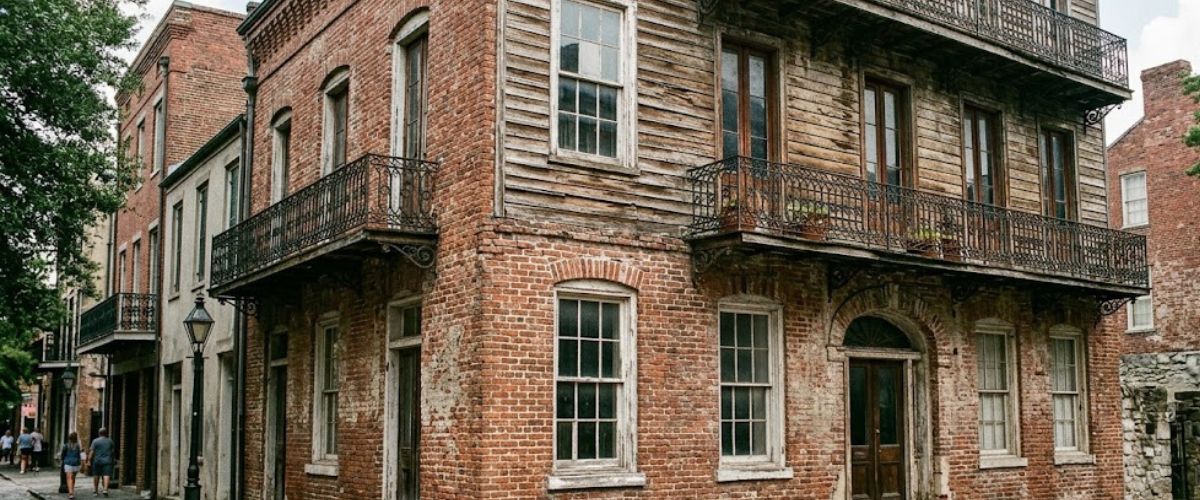
Why historic Chattanooga homes have more rodent pressure
The same building characteristics that make Chattanooga's pre-1940 neighborhoods architecturally significant also make them structurally vulnerable to rodent entry. St. Elmo, Fort Wood, Highland Park, Fairmount, and the ridge-top sections of Missionary Ridge contain some of the most historically intact residential architecture in Tennessee — and some of the most rodent-active housing stock in Hamilton County.
The structural characteristics that drive the higher rodent pressure in older Chattanooga homes:
- Balloon framing: Used in most Chattanooga homes built before approximately 1930. Unlike modern platform framing, balloon-framed exterior walls run studs continuously from the foundation sill to the roof rafter without horizontal fire-blocks at each floor level. This creates uninterrupted vertical wall cavities that rodents use as travel routes between the basement and attic without entering the living space. A roof rat can enter at the roofline, travel down the interior wall cavity, and nest in the basement — all unseen.
- Original wood soffits: Deterioration at the soffit-fascia junction, corner joints, and nail holes is the most common roof-rat entry point in St. Elmo and Fort Wood homes. Wood expands and contracts with Chattanooga's humid subtropical seasons, opening gaps that weren't there when the house was built.
- Uncoursed stone and rubble foundations: Common in pre-1910 construction. Natural gaps between stones are excellent rodent entry points and are difficult to seal without disrupting the historic material.
- Knob-and-tube wiring chases: The open wiring chases left by knob-and-tube systems (still present in many Fort Wood and St. Elmo homes that haven't been fully rewired) create pathways through walls that rodents exploit.
- Unscreened or poorly screened attic vents: Pre-1960 vent screens were typically lightweight galvanized mesh that has long since corroded or been damaged. Most replacement is fiberglass screen cloth — which roof rats bite through in minutes.
Heritage-appropriate exclusion materials
The correct materials for rodent exclusion in historic Chattanooga homes are different from what's typically used in modern construction. The wrong material can cause masonry damage, stain historic finishes, or be visually incompatible with historic character areas.
| Location | Heritage-appropriate ✓ | Avoid ✗ | Why |
|---|---|---|---|
| Stone / brick foundation gaps | Copper mesh packed into gap, lime-based mortar pointing | Expanding polyurethane foam, Portland cement mortar | Foam cracks masonry as it expands and contracts; Portland cement is harder than historic brick and causes spalling over time. |
| Soffit gaps / wood joints | Copper mesh, galvanized hardware cloth, DAP Alex Flex paintable sealant | Spray foam, silicone (unpaintable), foam backer rod | Spray foam is visible and non-paintable; silicone can't be painted to match historic finishes. |
| Attic vent screens | ½-inch galvanized or stainless hardware cloth, custom-cut to fit existing frame | Fiberglass insect screen, vinyl screen | Fiberglass and vinyl are bitten through within days by roof rats. Hardware cloth is the only durable vent exclusion material. |
| Chimney flashing gaps | Lead flashing repair (period-appropriate), copper mesh in open joints | Spray foam, rubber sealant on visible masonry | Foam and rubber sealants are visually incompatible with historic chimney masonry and can trap moisture. |
| Utility line penetrations | Copper mesh around penetration, steel wool backed by mesh | Spray foam alone | Foam degrades UV-exposed and can be compressed by rodents over time; mesh provides permanent mechanical barrier. |
The historic home rodent exclusion process
Heritage inspection
Full property assessment with historic-structure awareness: documenting entry points without disturbing historic fabric, photographing all gaps for prioritization.
Species & extent
Confirming roof rat vs. Norway rat vs. house mouse, mapping activity zones through the balloon-frame cavities, attic, and foundation level.
Trapping phase
Species-correct trap placement on confirmed runways. Snap traps on attic joists for roof rats, lower-level placement for Norway rats and mice.
Heritage exclusion
Material-appropriate sealing of all identified entry points after trapping completes. Copper mesh, hardware cloth, and lime-compatible sealants only.
Canopy briefing
Written assessment of tree branches within 6–8 ft of the roofline. Arborist referral for specific trimming recommendations if needed.
Historic neighborhoods we serve most frequently
- St. Elmo: The highest roof-rat call volume in Chattanooga, concentrated in the Victorian-era homes below St. Elmo Avenue and along the Lookout Mountain base. Roof rats in the pecan and oak canopy are the dominant species. Original wood soffit and balloon framing are almost universal in pre-1920 St. Elmo construction.
- Fort Wood (downtown): Chattanooga's oldest intact residential neighborhood, with a local historic district and design review board. Fort Wood's Late Victorian and Queen Anne homes have the most complex roofline geometries in the city — multiple gables, original slate roofing on some homes, and chimney stacks that create roof rat entry points at every flashing joint. Design review board notification may be appropriate for any visible exterior change, though most exclusion work falls within normal maintenance.
- Highland Park: McCallie Avenue Victorian homes with consistent oak and pecan canopy. Second-highest roof-rat volume behind St. Elmo. Many Highland Park homes still have original 1890s–1920s woodwork and soffit systems.
- Fairmount: Early 20th-century Craftsman bungalows and Colonial Revival homes between Highland Park and Missionary Ridge. Less extreme canopy pressure than St. Elmo but persistent roof-rat activity due to the corridor between the two ridge neighborhoods.
- Missionary Ridge: Ridge-top homes from the 1890s through 1940s. The forested ridge slope provides year-round canopy access to rooflines. Many Missionary Ridge homes have been renovated over the years, creating mixed framing systems that complicate exclusion mapping.
- North Chattanooga: River-corridor Victorian and Craftsman homes near the Walnut Street Bridge and Coolidge Park. Norway rat and house mouse pressure alongside roof rat activity, due to Tennessee River proximity.
Heritage home rodent problems need a heritage-aware approach
Free inspection · No damage to historic fabric · Same-day across Hamilton County
National Register and local historic district considerations
Rodent exclusion in a National Register or locally designated historic property involves a few considerations that homeowners in newer construction don't have to think about:
- National Register listing restricts federally funded or federally permitted work (Section 106 review). It does not restrict a private owner's maintenance and repair work, including pest exclusion, unless federal funding is involved. Most rodent exclusion on private National Register properties proceeds without any review requirement.
- Local historic district design review boards (Fort Wood's HDC is the primary one in Chattanooga) may require design review for visible exterior changes. Functional exclusion work — adding mesh to existing vent openings, filling gaps in mortar joints — typically falls within approved maintenance categories and does not require board approval. Installing new visible exterior elements (a permanent chimney cap that changes the profile, for example) may warrant a courtesy notification to the HDC.
- Tennessee State Historic Preservation Office (SHPO) guidance on rodent exclusion in historic structures recommends the same materials we use: copper mesh, lime-based mortars, and reversible mechanical barriers rather than foam-based sealants.
We are familiar with the constraints of Fort Wood's design review process and can advise on which work typically falls within standard maintenance and which might warrant design board notification before proceeding.
Pricing for historic home rodent control in Chattanooga
| Scope | Historic home range | Notes vs. modern home |
|---|---|---|
| Free inspection | Free | Heritage-structure assessment included; no extra charge. |
| Trapping + primary exclusion | $600–$1,400 | 15–30% higher than modern equivalent due to access complexity and material cost. |
| Full roofline exclusion | $1,200–$3,000 | Complex rooflines, original soffit, multiple vent types. Heritage materials cost more. |
| Foundation exclusion (stone/rubble) | $400–$1,100 | Copper mesh + lime pointing. Labor-intensive on uncoursed stone foundations. |
| Attic decontamination | $400–$1,000 | Access in balloon-framed attics requires more time; quoted after inspection. |
Frequently asked questions
Why are old Chattanooga homes harder to rodent-proof than newer ones?
Balloon framing, original wood soffits, uncoursed stone foundations, knob-and-tube wiring chases, and unscreened attic vents create far more entry points than modern platform-framed construction. A pre-1930 St. Elmo home can have dozens of potential entry points compared to a handful in a modern build.
Will sealing entry points damage my historic home?
Not when done with heritage-appropriate materials. Copper mesh packed into foundation gaps is reversible and non-reactive with historic masonry. Hardware cloth on soffit vents can be removed without damage. We never use expanding spray foam in visible historic masonry joints or structural components.
My home is on the National Register — are there restrictions on pest control work?
National Register listing restricts certain federally funded or permitted exterior alterations but does not restrict private maintenance and repair including pest exclusion. Most exclusion work falls within normal maintenance. Fort Wood's local HDC may warrant courtesy notification for visible exterior elements, but functional exclusion typically does not require design review.
What does rodent control for a historic Chattanooga home cost?
Historic homes typically cost 15–30% more than comparable modern homes for exclusion work. A St. Elmo or Fort Wood home with an active roof-rat infestation — inspection, trapping, and primary exclusion — runs $600–$1,400. Whole-house exclusion on a large pre-1900 heritage home can run $1,500–$3,000.
Can rats travel inside the walls of a balloon-framed house?
Yes. Balloon framing creates uninterrupted vertical wall cavities from the foundation sill to the roof rafter — no fire-blocks at each floor level like modern platform framing. A rat can enter at the roofline and reach the basement through the wall cavity without entering the living space.