Crawl space rodent pressure in Chattanooga's climate
Chattanooga's humid subtropical climate makes crawl spaces one of the most rodent-attractive spaces in a home. The ridge-and-valley topography creates crawl spaces with variable drainage — some dry, some chronically wet from hillside runoff — and the consistent summer humidity means that even well-drained crawl spaces maintain moisture levels that rodents find attractive without active management.
Norway rats are the primary crawl space rodent in Chattanooga homes at or below grade level — they enter through foundation gaps and establish burrows in the soil beneath the vapor barrier. House mice use the crawl space as a transit zone, entering through foundation vents and moving upward through wall cavities into the living space above. The moisture-rodent connection is direct: wet crawl spaces have more active infestations, more severe infestations, and more rapid vapor barrier damage from rodent activity than dry crawl spaces.
What crawl space rodent prevention covers
- Foundation vent screening: Original foundation vents screened with ½-inch galvanized hardware cloth over the existing vent opening. Mesh sized to prevent Norway rat and house mouse entry while maintaining the airflow the vent was designed for.
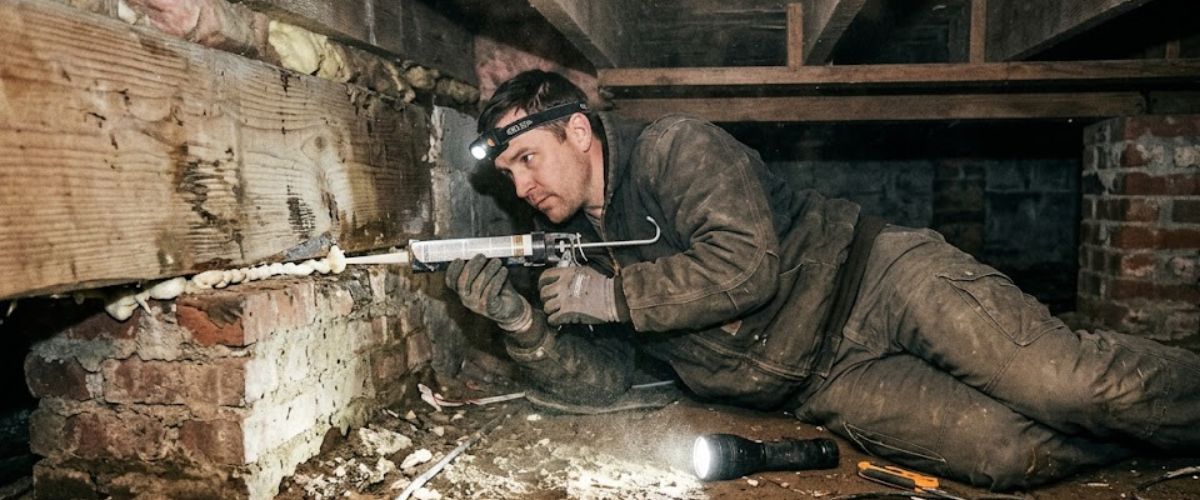
- Foundation wall gap sealing: Cracks, mortar gaps, and weep holes in block, brick, and stone foundations sealed with copper mesh and mortar-compatible products. Poured concrete foundation cracks sealed with hydraulic cement.
- Utility penetration sealing: All utility lines entering through the foundation wall or slab surrounded with copper mesh collars and sealed with appropriate caulk.
- Access hatch sealing: Crawl space access hatch frame gapped sealed; hatch itself fitted with a compression gasket if absent.
- Vapor barrier assessment: Existing vapor barrier condition mapped — punctures, tears, shredded sections, and areas of inadequate coverage documented. Replacement scope provided if needed.
- Humidity assessment: Ventilation pattern and moisture sources identified. Recommendations for passive ventilation improvement or mechanical dehumidification if humidity is driving the problem rather than entry points alone.
Pricing
| Service | Typical range | Notes |
|---|---|---|
| Crawl space inspection | Free | Entry point mapping, vapor barrier condition, humidity assessment. Written report same-day. |
| Foundation vent screening | $35–$75/vent | Hardware cloth over existing vent. Material and labor. |
| Foundation gap sealing | $150–$450 | Cracks, mortar gaps, and utility penetrations. Based on number and type of entry points. |
| Vapor barrier replacement | $800–$2,200 | Full replacement after decontamination. Based on crawl space size and access. |
Frequently asked questions
Why does moisture in my crawl space attract rodents?
High humidity (80–90% RH in an unmanaged Chattanooga crawl space) provides comfortable temperature regulation, a ground-moisture water source, and soft wet soil ideal for Norway rat burrowing. Reducing crawl space humidity through vapor barrier management and ventilation is as important as sealing entry points.
What is a vapor barrier and why does it matter?
Polyethylene sheeting on the crawl space floor that limits ground moisture from evaporating into the space. In Chattanooga's climate, homes without intact vapor barriers develop high humidity that accelerates wood rot, supports mold, and creates attractive rodent harborage conditions year-round.
What are the rodent entry points into a Chattanooga crawl space?
Foundation vents with corroded or damaged screens; foundation wall cracks and mortar gaps (common in pre-1960s brick and stone foundations); utility penetrations (water lines, drainpipes, HVAC lines); and the crawl space access hatch, which often has no seal between the hatch frame and the foundation opening.
Do I need to treat rodents before installing a new vapor barrier?
Yes — always treat first, then install. Installing a new barrier over an active population traps animals, carcasses, and contamination beneath it. The correct sequence: population control, decontamination, then vapor barrier replacement.