Why eco-friendly matters in Chattanooga's ridge-and-river landscape
Chattanooga's geographic context — the Tennessee River corridor, the Lookout Mountain and Signal Mountain ridges, Chickamauga Creek, and the forested bluffs throughout Hamilton County — makes the choice of rodent control method more consequential than it is in purely urban settings. Second-generation anticoagulant rodenticides (SGARs) bioaccumulate in the food chain. A dying rat in Chattanooga's ridge communities is easy prey for barred owls, great horned owls, and red-tailed hawks that have active territories throughout the mature canopy neighborhoods. A raptor that consumes a brodifacoum-affected rat can develop the same anticoagulant toxicity — internal bleeding, weight loss, and death — at levels far below what's visible to a homeowner managing a bait station program.
This isn't a theoretical risk. Wildlife rehabilitation organizations in the Chattanooga region regularly receive raptors with confirmed anticoagulant rodenticide toxicity. Eco-friendly rodent control — exclusion-first, mechanical trapping, no SGARs — is the responsible approach for any property in the ridge communities, near the river corridor, or adjacent to the Chickamauga Lake wildlife areas.
The eco-friendly method stack
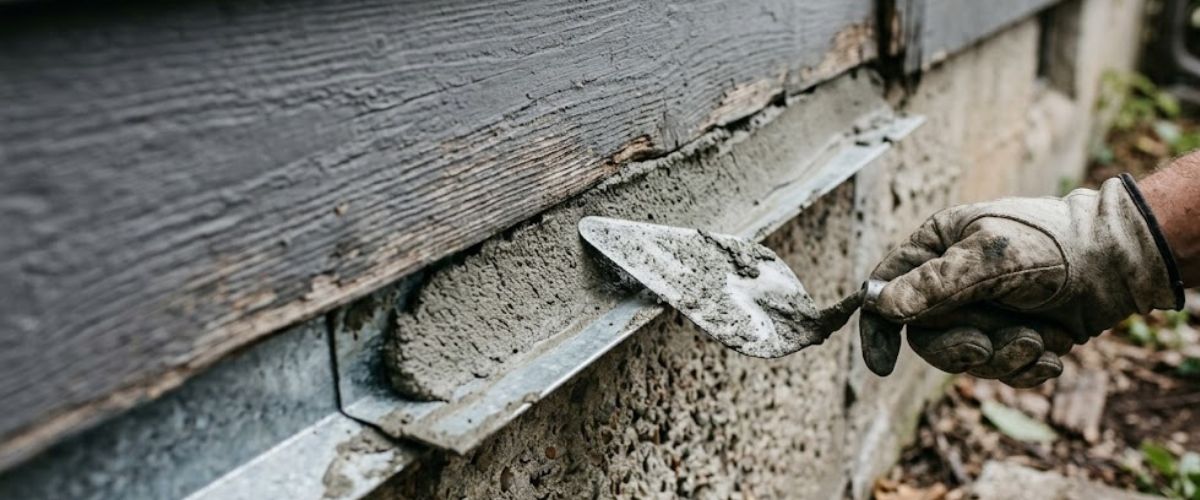
- Exclusion sealing (primary): The most durable rodent control method available. A properly sealed building doesn't need ongoing chemical management. Copper mesh, hardware cloth, galvanized steel, hydraulic cement, and material-compatible caulks — all without rodenticide.
- Snap traps (fast, humane, no toxin): Snap traps cause instantaneous death and leave no chemical residue in the tissue of the animal — eliminating secondary-poisoning risk. They are considered humane by wildlife management standards and are the backbone of eco-friendly programs where live-catch isn't required.
- Live-catch trapping (optional): For properties where any lethal method is unacceptable, live-catch traps are used with 24–48 hour check schedules. Captured animals are relocated. We advise honestly on realistic expectations by species — Norway rat live-catch has limitations.
- Non-toxic monitoring stations: Flour-tile or glue-pad monitoring stations to detect activity without any chemical application. Used as the verification layer after exclusion sealing and as the ongoing detection tool in sensitive areas.
- Habitat modification guidance: Written recommendations for reducing outdoor attractants (bird feeders, compost, wood pile placement) that can be implemented without any chemical application.
Pricing
| Service | Typical range | Notes |
|---|---|---|
| Eco-friendly inspection | Free | Entry point detection + outdoor attractant assessment + written program recommendation. |
| Snap trap program (no rodenticide) | $250–$500 | Trap set + 2–3 follow-up visits. Comparable to conventional trapping cost. |
| Live-catch program | $350–$700 | Higher cost due to 24–48 hr check requirement. Best for house mice. |
| Exclusion sealing (primary) | $300–$1,400 | The durable solution. Quoted after detection survey. |
Frequently asked questions
What makes a rodent control approach eco-friendly?
Eliminating or strictly limiting second-generation anticoagulant rodenticides (SGARs) that accumulate in the food chain and cause secondary poisoning in raptors, owls, foxes, and pets. Prioritizing exclusion and mechanical controls over chemical suppression — and recognizing that a sealed building doesn't require ongoing chemical management.
Is eco-friendly rodent control effective?
Yes, when the exclusion component is done thoroughly. The evidence base for exclusion as the most durable rodent control method is strong. The limitation: eco-friendly approaches require more thorough upfront detection and sealing, and live-catch traps require 24–48 hour checking. Properties where complete exclusion is possible achieve durable results.
Is Chattanooga's ridgeline habitat sensitive to rodenticide?
Yes. Lookout Mountain, Signal Mountain, and Missionary Ridge are home to barred owls, great horned owls, and red-tailed hawks actively hunting rodents. These birds face documented secondary-poisoning risk from rodents that have consumed SGAR bait. Properties in ridge communities and near the river corridor have particularly high risk profiles.
Do eco-friendly programs cost more than conventional?
Typically 10–25% more for the treatment phase, due to more thorough exclusion work and live-catch check frequency. Offset over time by the durability of exclusion-based programs — a properly sealed home requires far less ongoing chemical maintenance than a continuous bait-station program.