What rodent decontamination addresses — and what it doesn't
Rodent odor removal and decontamination is the cleanup phase that follows successful population control. Trapping and exclusion sealing removes the live animals and prevents re-entry. Decontamination removes what they left behind: urine-saturated insulation, fecal accumulation on joists and rafters, dead carcasses in inaccessible cavities, and the pheromone trails that attract subsequent rodents to the same entry routes.
Decontamination does not address structural damage — gnawed wiring, damaged vapor barriers, or compromised insulation R-value. Those are repair items addressed under our rodent damage repair and attic restoration services. But eliminating the biological contamination is the prerequisite for everything else — you can't accurately assess structural damage through urine-black insulation, and you can't safely work in a contaminated attic without first controlling pathogen exposure.
Sources of rodent odor in Chattanooga homes
- Dead rodents in wall cavities: Rodents that die in sealed wall voids after exclusion work produce odor for weeks to months. Location is typically determined by following the strongest smell — walls near water pipes are common sites because rodents seek moisture before death. Locating and extracting carcasses sometimes requires opening drywall.
- Urine-soaked attic insulation: Roof rat colonies that used attic insulation as both runway and latrine for multiple breeding cycles can saturate cellulose or fiberglass batt insulation beyond remediation. The insulation must be physically removed. HEPA vacuuming and disinfection alone cannot address fully saturated material.
- Crawl space contamination: Norway rats and house mice in crawl spaces leave fecal accumulation on vapor barriers and floor joists. In Chattanooga's humid climate, this material retains moisture and continues to generate odor and pathogen risk for months after the infestation is resolved.
- HVAC system contamination: Air handlers located in contaminated attics or crawl spaces draw contaminated air through the system. Duct cleaning after attic or crawl space decontamination is often necessary to fully resolve odor in the living space.
- Pheromone residue on entry surfaces: Rodent sebaceous glands leave pheromone-laced grease marks along travel routes that persist after cleaning and attract new animals to the same entry points. Enzymatic cleaners applied to entry surfaces after exclusion sealing interrupt this attractant.
Decontamination process
Dead-carcass sweep
Full attic and crawl space search for deceased animals. Accessible carcasses removed and disposed of. Inaccessible wall-cavity locations identified by odor concentration mapping.
Contamination assessment
Insulation contamination extent mapped. Judgment on remediation vs. replacement made on-site with client. Written scope provided before work begins.
HEPA vacuuming
Fecal pellets and debris HEPA-vacuumed from rafters, joists, and insulation surfaces. Disposable HEPA filters — contaminated material contained, not redistributed.
Disinfection treatment
EPA-registered disinfectant applied to all contaminated surfaces. Enzymatic odor-neutralizer applied to entry-point surfaces and runway paths.
Insulation removal (if required)
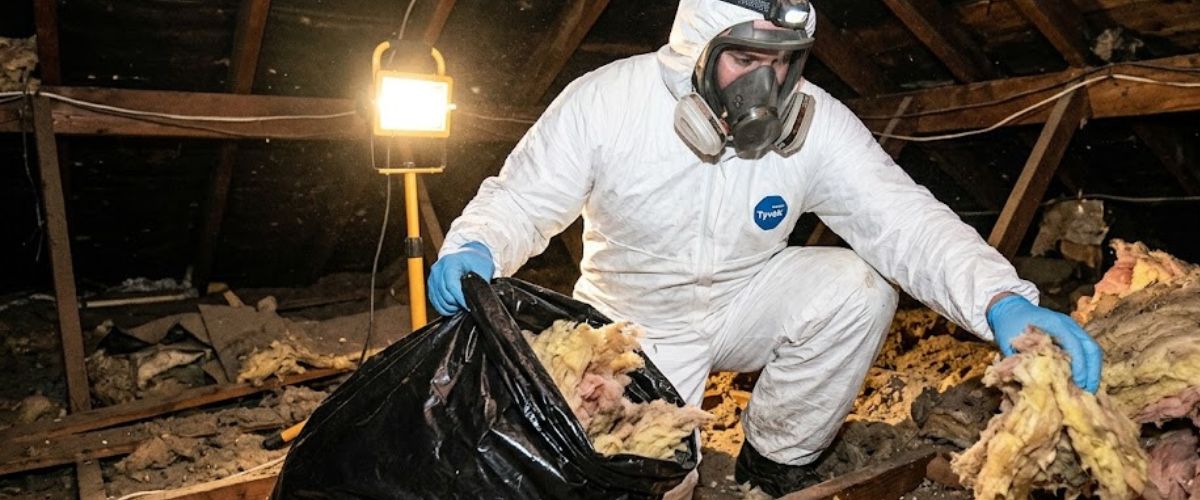
Fully saturated insulation removed via negative-pressure equipment to prevent cross-contamination of living spaces. Bagged and disposed. New insulation quoted separately.
Pricing
| Scope | Typical range | Notes |
|---|---|---|
| Decontamination inspection | Free | Contamination extent mapped, written scope provided. |
| Surface disinfection + HEPA vacuum (intact insulation) | $400–$900 | Attic or crawl space with moderate contamination, insulation intact. |
| Partial insulation removal + disinfection | $700–$1,400 | Heavily contaminated zones removed; intact areas treated. |
| Full attic insulation removal (1,500–2,500 sq ft) | $1,200–$2,800 | Complete removal. New insulation quoted separately. |
| Crawl space cleanup + vapor barrier treatment | $600–$1,200 | Fecal removal, joist disinfection, vapor barrier assessment. |
Frequently asked questions
Why does my home still smell like rodents after treatment?
Persistent odor after treatment almost always traces to a dead rodent in an inaccessible cavity, urine-saturated insulation in the attic or crawl space, or dried fecal matter on structural surfaces. Trapping removes live animals but leaves the contamination — decontamination is a separate step that must follow population control.
How long does dead rodent smell last?
A dead mouse in a wall cavity: 1–4 weeks in warm months. A dead Norway rat: 3–8 weeks. A dead roof rat in a Chattanooga attic (where summer temps exceed 120°F): 2–4 weeks of intense odor before desiccation. Decontamination is the only reliable resolution; odor-masking products cannot reach the source.
Is rodent urine in my insulation a health hazard?
Yes. Dried rodent urine and feces can harbor hantavirus, leptospirosis organisms, and salmonella. In Chattanooga's humidity, contaminated insulation retains moisture and supports pathogen viability longer than in drier climates. HVAC systems with air handlers in contaminated spaces can circulate contaminated particulates into living areas.
What does rodent decontamination cost in Chattanooga?
Surface disinfection with intact insulation: $400–$900. Full contaminated insulation removal in a 1,500–2,500 sq ft attic: $1,200–$2,800. Exact scope and cost provided after the free inspection.