Why spring is Chattanooga's second rodent pressure peak
Most homeowners think of fall as Chattanooga's rodent season — and they're right that fall is the more intense of the two pressure peaks. But the February through April spring window is the second most important period, and it catches homeowners off guard more often than fall does because the spring pressure is less visible and less dramatic in its initial presentation.
Three things happen during Chattanooga's spring rodent window:
Wintering mouse populations begin breeding in place. House mice that entered homes during October's cold fronts and survived the winter have been in the wall voids and kitchen areas for 3–4 months. In February, as day length increases and interior temperatures stabilize, these animals begin breeding. A single pair of house mice that entered in October can produce 5–6 litters by April, with each litter containing 4–8 pups. The mouse population that a homeowner thought was a single animal or a small problem in October can be dozens by April. This is the most common source of spring infestation calls — a winter problem that wasn't treated has become a much larger spring problem.
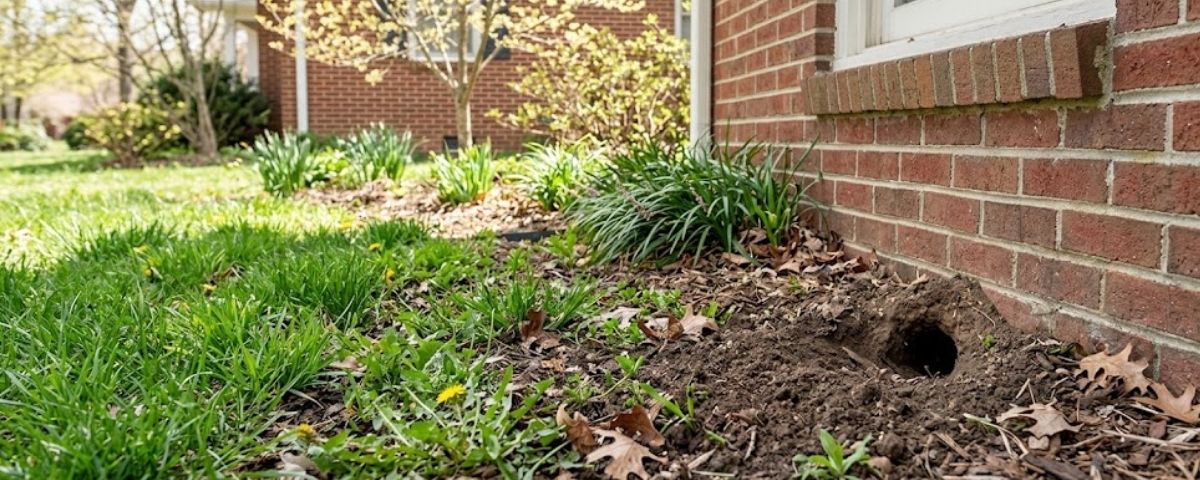
Norway rat new burrow activity appears. Norway rats that have been overwintering in established burrow systems begin expanding and establishing new burrows in February and March as soil temperatures rise. New burrow entrances appearing along foundation walls, garden beds, and drainage areas in February are the spring equivalent of October's house mouse entry — the beginning of a pressure cycle that will peak in April and May. This is also when freeze-thaw cycling through the winter opens new foundation gaps that provide new entry routes for both species.
Roof rats resume canopy movement. Roof rats that have been in attics through winter begin moving back through the canopy as temperatures rise in March and April. This movement phase is when roofline exclusion gaps that weren't sealed in fall allow new animals to enter as the overwintered population exits. Properties that were treated for roof rats in fall but not fully sealed may see new attic activity in April as the spring canopy movement brings new animals to the same entry points.
The spring prevention window: February through March
The optimal spring prevention window is February through early March — before breeding cycles accelerate, before new Norway rat burrow establishment is complete, and while freeze-thaw foundation gaps are fresh enough to identify before they're hidden by spring vegetation growth.
A spring prevention visit in February or March covers:
- Foundation perimeter walk — identifying new cracks, new burrow entrance activity, and any weep hole gaps opened by winter freeze-thaw cycles
- Crawl space or basement assessment — checking for Norway rat activity and any foundation gap formation over winter
- Interior trap check — confirming whether any winter mouse population is still active or has exited with spring warming
- Exterior bait station rebait — refreshing perimeter station bait before spring outdoor population activity increases
- New gap identification and on-site sealing — addressing any foundation or utility penetration gaps that weren't present or weren't identified in the fall inspection
What to do if you're finding signs of rodents in spring
Spring droppings in a kitchen area typically indicate a winter mouse population that was present but less active during the coldest months and is now more active as interior temperatures rise with spring. This is a contained infestation that's been in place all winter — the right response is immediate snap trap placement in the active areas and an entry-point inspection to close the original entry before spring activity continues. The population is unlikely to be large if it's been present all winter in a single location, but prompt treatment before spring breeding accelerates is important.
New Norway rat burrows appearing along the foundation in February or March indicate that the spring outdoor population expansion is underway. Exterior burrow treatment at the active entrance, combined with foundation gap sealing, addresses this before the colony establishes fully. The Norway rat program includes outdoor burrow treatment as part of the spring service protocol.
Call for a spring inspection if you haven't had a fall inspection and are uncertain about the current state of your home's rodent status. A February inspection provides a clear baseline before the spring breeding and new burrow activity peaks — giving you the information needed to address whatever is present before it becomes the summer problem.
Same-day rodent control across Hamilton County
Call now — we’ll schedule the inspection while you’re on the phone.