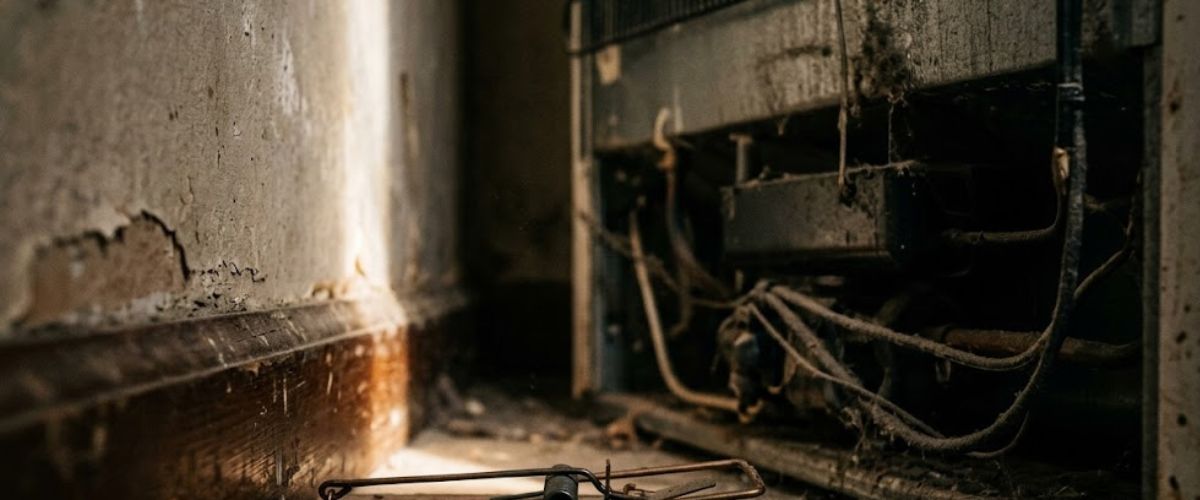
Why the garage is Chattanooga's most common rodent entry point
In our experience across Hamilton County, more than half of residential house mouse infestations enter through the garage first. The reasons are structural and behavioral: garage door bottom seals degrade quickly in Chattanooga's humid climate, side-entry service doors rarely have adequate thresholds, and garages connect to the house through an interior door that is frequently left open and rarely checked for gaps.
The timing follows the seasonal pressure curve. House mice begin moving indoors with the first October cold fronts — and the garage is the warmest, most accessible first stop. A mouse that enters the garage in October will typically move into the living space through the garage-to-house door within 1–3 weeks if that door has any gap at the threshold or frame.
The five garage entry points we find most often
- Garage door bottom seal: Worn or cracked rubber seals — especially at the corners where the seal folds and deteriorates first. A quarter-inch gap at the corner is all a house mouse needs.
- Garage door side gaps: The gap between the door edge and the vertical track. Brush seals on the side track reduce this dramatically; most Chattanooga garages don't have them.
- Service door threshold: The gap under the side entry door. A standard threshold without a sweep allows mice through freely.
- Utility penetrations: Electrical conduit, water lines, and dryer vents passing through garage walls often have unsealed gaps connecting the garage to the wall cavity and living space.
- Soffit-to-attic connection: In some Chattanooga garage designs, the garage attic connects to the house attic above the interior wall. A mouse in the garage attic can reach the house attic through this connection — we check for it on every garage inspection.
The garage rodent control process
Inspection
Full garage walk-through: droppings mapping, gnaw-mark survey, all five entry-point categories assessed. Interior door gap and threshold checked.
Trap set
Snap traps placed along garage wall junctions, behind stored items, and at the interior door threshold. Bait selected by season and evidence level.
Seal assessment
Bottom seal condition evaluated. Replacement recommended if degraded. Side brush seals assessed and installed if absent.
Structural sealing
Utility penetrations sealed with copper mesh and caulk. Service door threshold and sweep replaced or shimmed. Soffit connection addressed if found.
Follow-up
Return visit in 7–10 days to remove catch, re-set traps, confirm seal integrity, and assess whether activity has moved into the living space.
Pricing
| Service | Typical range | Notes |
|---|---|---|
| Garage inspection + trap set | $175–$325 | 1–2 car garage. First visit including trap placement. |
| Bottom seal replacement | $75–$150 | Standard double-car door. Material and labor. |
| Service door threshold / sweep | $60–$120 | Per door. Material and labor. |
| Full structural sealing | $150–$400 | All identified points: utility penetrations, door seals, soffit connection. |
| Follow-up trap check | $75–$125 | Per visit. Every 7–10 days until activity ceases. |
Frequently asked questions
Why do mice always seem to get in through the garage?
Bottom seals degrade quickly in Chattanooga's climate — typically 3–5 years before gaps form. Garages are also less maintained, with unsealed utility penetrations and service door gaps that make them the path of least resistance for mice seeking warmth in October.
How do I know if mice are in my garage vs. inside the house?
Garage-specific signs: droppings in corners, gnaw marks on cardboard or pet food, nesting in stored insulation. If droppings appear in kitchen cabinets or under appliances, they've already moved into the living space.
What is a garage door bottom seal?
The rubber strip at the bottom of the garage door. When worn, gaps at the corners allow mice and juvenile Norway rats through freely. Replacement is one of the highest-impact, lowest-cost prevention measures for Chattanooga homes.
Do you seal the garage-to-house door gap?
Yes — we check the interior door threshold, sweep condition, and frame gaps on every inspection. This is as important as the exterior perimeter.
What does garage rodent control cost in Chattanooga?
Inspection plus trap program: $175–$325. Bottom seal replacement: $75–$150 additional. Full structural sealing: $150–$400 additional.